
Feeling Off Lately? Here's What Low Testosterone Really Looks Like (and How to Fix It)
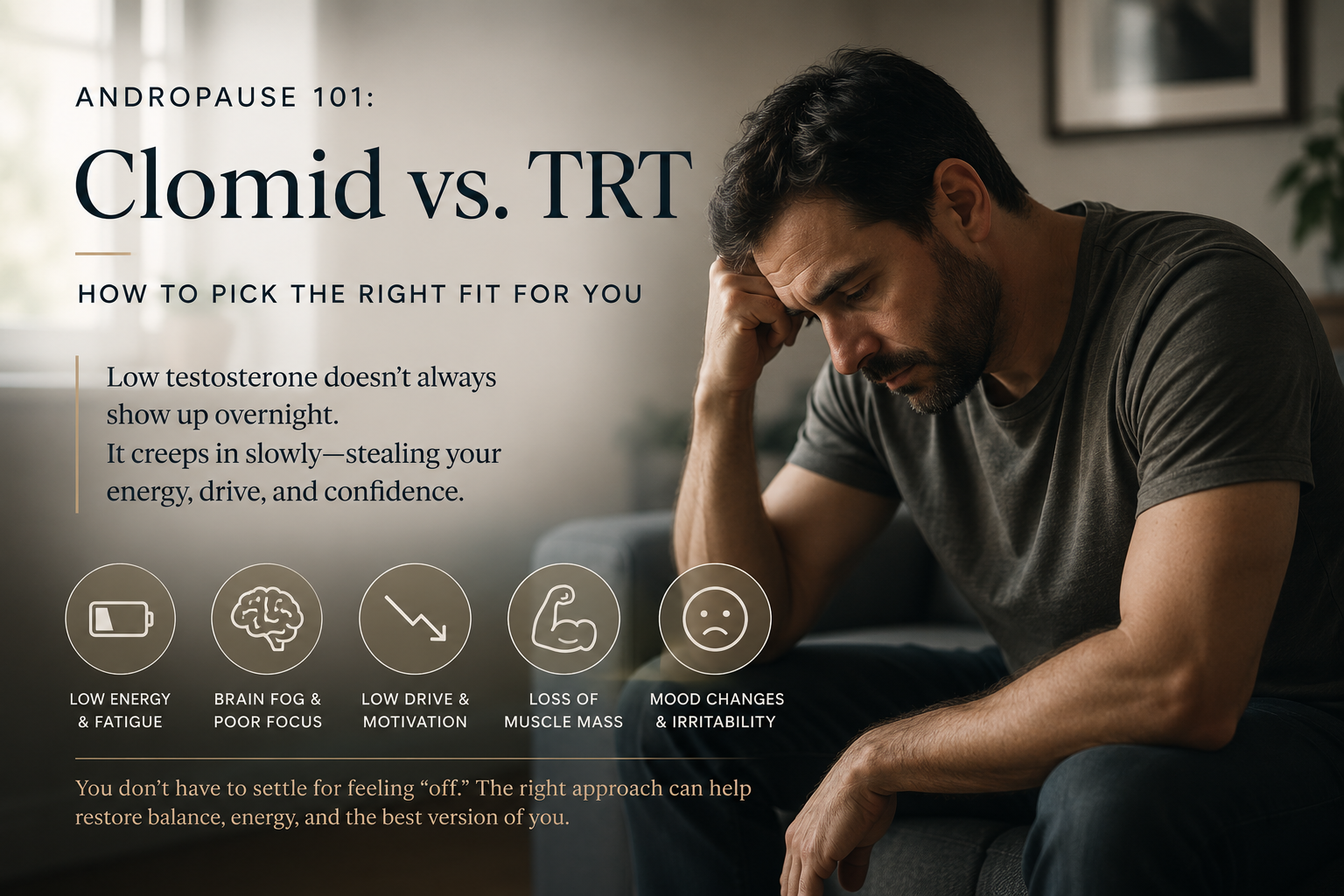
Struggling with low testosterone can leave you feeling drained, unmotivated, and honestly just not like yourself. The good news? You have real, effective options for turning that around. Two of the most popular are Testosterone Replacement Therapy (TRT) and Clomid, and today we're breaking down exactly how each one works so you can walk into your next doctor's visit feeling informed and confident. Let's dive in!
Wait, What Exactly Is Andropause?
You've probably heard of menopause, but did you know men go through their own hormonal shift too? It's called andropause (sometimes nicknamed "male menopause"), and it describes the gradual, natural decline in testosterone that tends to kick in during your 30s and keeps creeping along at about 1% per year after that.
Unlike menopause, andropause doesn't show up overnight. It's sneaky. It creeps in slowly enough that a lot of guys just chalk the symptoms up to "getting older" instead of realizing something hormonal might be going on.
So what should you actually be watching for? Common signs of low testosterone include:
- Persistent fatigue or low energy
- Reduced sex drive or erectile difficulties
- Loss of muscle mass and increased body fat
- Mood changes, irritability, or brain fog
- Trouble sleeping
- Difficulty concentrating or a general lack of motivation
If a few of these are hitting close to home, don't panic and don't guess. A simple blood test can check your testosterone levels and help you and your provider figure out whether andropause (or something else entirely) is behind how you've been feeling.
TRT and Clomid: What's the Difference?
Here's where things get interesting, because TRT and Clomid take two very different roads to the same destination: healthier testosterone levels.
TRT works by supplementing your body with testosterone directly, usually through injections or pellets given on a regular schedule. Since you're introducing testosterone from an outside source, TRT tends to raise your levels quickly and effectively, which can bring fast relief from low T symptoms.
Clomid takes a totally different approach. Instead of adding testosterone from the outside, it encourages your body to produce more of its own. It does this by blocking estrogen receptors in the brain, which in turn boosts the hormones that signal your testicles to ramp up natural testosterone production. Fun fact: Clomid (clomiphene citrate) actually started out as a fertility treatment for women, and today it's widely used off label to help men raise testosterone while keeping their natural hormone production and fertility intact.
How Do TRT and Clomid Actually Boost Your Testosterone?
Let's put them side by side so you can see exactly how they stack up.
| Factor | TRT | Clomid |
|---|---|---|
| How it works | Supplies testosterone directly from an outside source | Signals your body to make more of its own testosterone |
| Form | Injections, pellets, gels, or patches | Daily or every other day oral tablet |
| Effect on natural production | Can suppress your body's own testosterone and sperm production | Preserves and can even stimulate natural production and fertility |
| Onset of relief | Often faster since testosterone is supplied directly | Can take a few weeks as your body ramps up production |
| Fertility impact | May reduce sperm count over time | Generally fertility friendly, and sometimes used specifically to support it |
| Monitoring needed | Testosterone, hematocrit, and estrogen levels | Testosterone, LH, and estrogen levels |
So Which One Is Right for You?
Great question! It really comes down to your goals, your symptoms, and your lifestyle.
TRT might be your best bet if you:
- Have significantly low testosterone with more noticeable symptoms
- Aren't worried about preserving fertility right now
- Want the most direct and predictable way to raise your levels
- Don't mind regular injections or pellet appointments
Clomid might be your best bet if you:
- Want to protect or even improve your fertility
- Have low testosterone tied to a signaling issue between your brain and testicles (what doctors call secondary hypogonadism)
- Would rather take a daily pill than deal with injections
- Want to avoid testicular shrinkage, a common TRT side effect
Let's Talk Side Effects
Both treatments are generally well tolerated, but it's smart to know what you're signing up for.
TRT can sometimes cause elevated red blood cell counts (called polycythemia), acne, fluid retention, testicular shrinkage, and over time, suppressed natural testosterone and sperm production.
Clomid can occasionally cause mood swings, visual disturbances, and less commonly, headaches or nausea. Because it works through your brain's hormonal signaling system, results can vary a bit more from person to person compared to TRT.
The takeaway? Neither treatment is one size fits all, and how you respond depends on your dosage, your individual biology, and how closely your treatment is monitored.
The Bottom Line
There's no single "winner" in the TRT versus Clomid debate. The right choice depends entirely on your symptoms, your hormone levels, your fertility goals, and what fits your lifestyle. Some men thrive on TRT alone, others do wonderfully on Clomid, and plenty benefit from a combination approach or switch things up over time as their needs change.
The most important first step is simple: get a proper hormone panel done and team up with a provider who actually specializes in men's hormone health. If you're in Roseville and you've been wondering whether andropause is behind how you've been feeling lately, a quick consultation and some straightforward blood work can give you real answers instead of leaving you to guess.
This article is for general educational purposes only and isn't a substitute for individualized medical advice. Always talk to a qualified healthcare provider before starting any hormone therapy.
Frequently Asked Questions
What is the main difference between TRT and Clomid? TRT supplies testosterone from an outside source, while Clomid stimulates your body to produce more testosterone naturally.
Does Clomid affect fertility the way TRT does? No. Clomid is generally fertility friendly and is sometimes used specifically to support fertility, while TRT can suppress natural sperm production over time.
How do I know if I have andropause? A simple blood test measuring your testosterone levels, combined with a review of your symptoms, is the best way to find out.
Can I switch between TRT and Clomid? Yes. Many men adjust their treatment approach over time based on how their body responds and how their goals evolve. Your provider can help guide that decision.